 Visit MrsMakeup Ireland
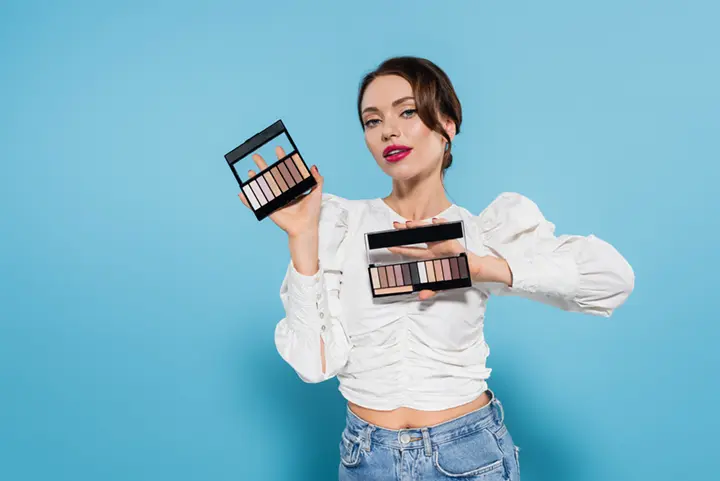
There is no feeling quite like holding a brand new luxury makeup palette. The heavy casing, the embossed pans, the rich colour story — it is designed to make you fall in love before you even pick up a brush. And as a gift, a beautifully packaged palette is genuinely hard to beat on presentation alone.
But as high-street brands keep stepping up their formulas, the gap between affordable and luxury is narrower than it used to be — and the ingredient picture is more complicated than the price tag suggests. The same pattern we see in our clean makeup reviews holds here: a higher price does not reliably mean cleaner or better formulated.
Here is where luxury palettes actually justify their price, where you can save your money, and the one thing the price tag will never tell you.
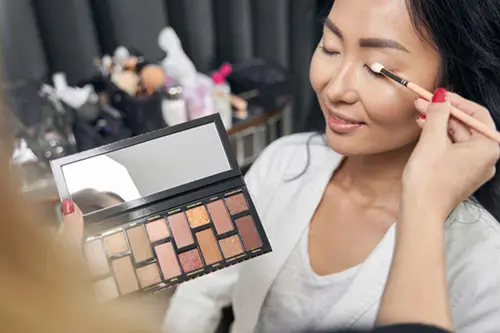
Where to Splurge and Where to Save
The honest answer: it depends entirely on what you are buying the palette for. Not all eyeshadow types are equally hard to formulate, and the price difference is most justified at the technical end of the spectrum.
| Palette type | Splurge | Save |
|---|---|---|
| Complex shimmers & foils | ✓ Luxury wins here | Budget often falls flat |
| Multi-chrome & duochrome | ✓ Hard to do cheaply | Rare exceptions only |
| Everyday matte neutrals | Marginal improvement | ✓ Budget performs well |
| Warm transition shades | Not worth the premium | ✓ Budget earns its keep |
| Gift & presentation | ✓ Packaging matters here | Less impressive to unwrap |
The Formula: Pigmentation and Blendability
This is where luxury palettes have historically earned their price tag. Higher-end shadows tend to use more refined, finely milled powders and higher pigment concentrations — they blend with less effort and produce less fallout on the cheeks. For complex shimmers, foils, and multi-chrome finishes especially, the quality difference is real and visible.
For everyday matte shades — soft browns, creams, warm transition colours — that gap has closed considerably. A good budget palette in skilled hands can produce virtually indistinguishable results from a luxury equivalent, particularly with a primer underneath.
What Makes a Bold Shade Look High End Rather Than Just Bright?
Not all bold eyeshadows are created equal, and this is where the price difference becomes most visible. A well-formulated bold shade applies evenly in a single swipe, holds saturation without looking flat, and blends at the edges without turning patchy or muddy.
The tell is in the blending, not the swatch. A swatch on the back of your hand can look identical between a £10 and a £60 palette — the real difference shows up when you try to diffuse the colour into a seamless gradient.
A shade that is simply bright but poorly formulated needs several layers to build colour, sheds visible fallout, and looks chalky once you try to soften the edges. Blending is always the test — and it is a test you can do in-store before you hand over a penny.
Longevity and Wear Time
Luxury shadows typically contain superior binding agents that help the powder grip and resist creasing over a full day. In a straight wear test without primer, high-end shadows will almost always outperform budget ones. Almost.
The secret weapon: a good eye primer costing £7–£12 can make a budget eyeshadow last almost as long as a luxury one. Primer closes most of the longevity gap before you even open the palette — and if you are not using one already, that is the upgrade to make first.
The Matte vs Shimmer Divide
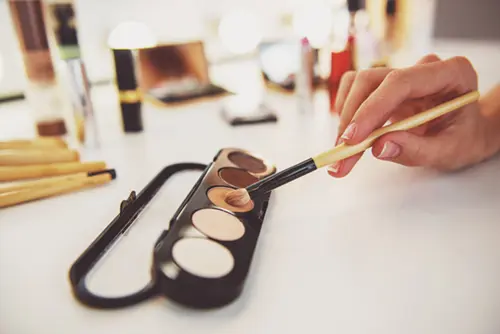
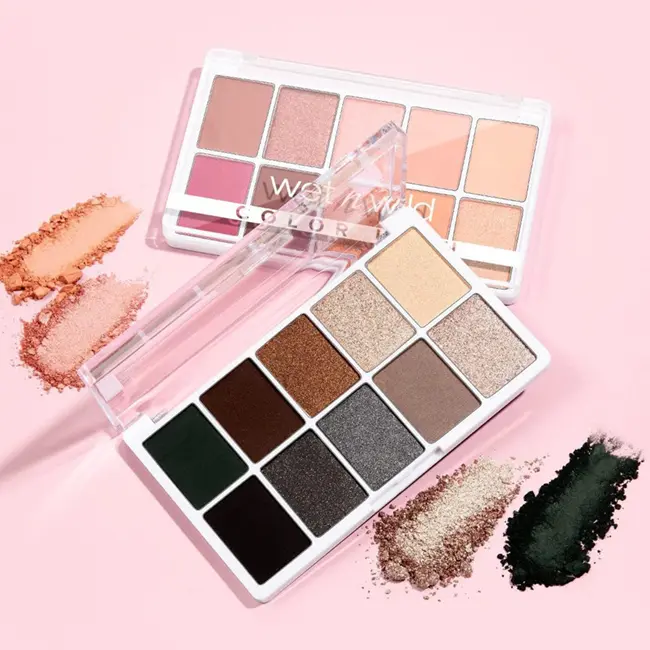
If a palette is loaded with intensely metallic, foil, or multi-chrome shimmers — this is where luxury genuinely earns its price. Formulating complex reflective finishes is technically difficult and expensive, and high-end brands do it noticeably better.
For basic daily matte shades, the same is not true. Soft browns, creams, and warm neutrals are relatively straightforward to formulate well. You do not need to pay premium prices for great matte staples — and this is precisely where a clean budget palette shines.
The One Thing the Price Tag Does Not Tell You
Here is what most palette comparison guides leave out entirely: expensive does not mean clean. Some of the most popular luxury eyeshadow palettes contain the same flagged ingredients as products costing a fraction of the price. And some budget palettes have significantly cleaner formulas than their premium counterparts.
Common flagged ingredients found in eyeshadow palettes
- Polyethylene — a microplastic used as a texture agent, found across both budget and luxury ranges. Hard flag under our standard.
- Nylon-12 — another microplastic, common in pressed powder formats. Hard flag under our standard.
- Parabens — propylparaben and butylparaben are hard flags across all categories. Methylparaben and ethylparaben are hard flags in makeup. All four are worth checking for in eyeshadow formulas.
When we assessed eyeshadow palettes available in the UK, the cleanest options came from mid-range and budget brands — not the luxury end. The e.l.f. Perfect 10 Eyeshadow Palette at £17 passed our ingredient check. The 3INA Four Shadow Palette at £24 passed. Several popular palettes at £40–£60 from well-known prestige brands did not.
Worth a mention here: the Sarah Keary Face & Eye Palette of Wonder is one of the more interesting options at this price point — and one of the cleaner palettes at that price. Not currently available with UK delivery so no affiliate path, but worth knowing if you are shopping Irish brands.
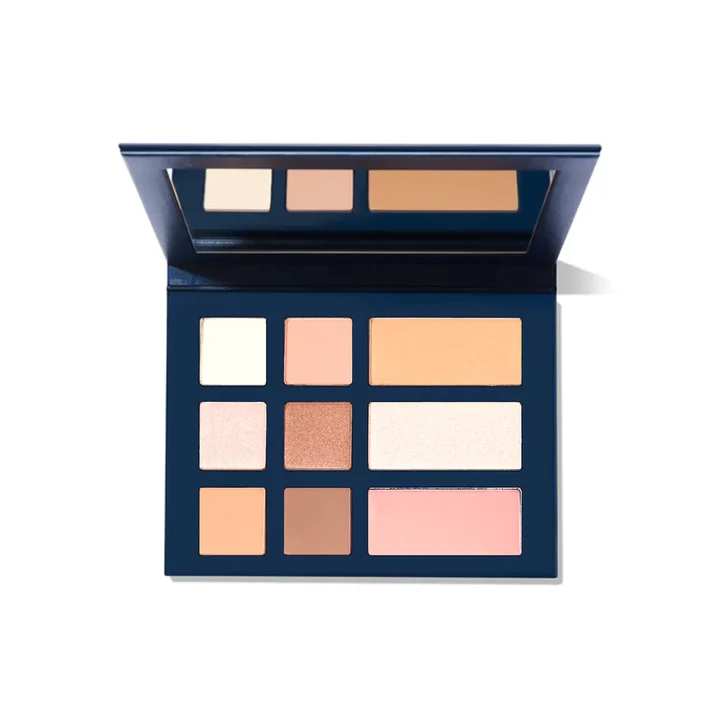
If ingredient transparency matters to you — or to the person you are buying for — price is not a reliable guide.
How to Test a Palette Before You Buy
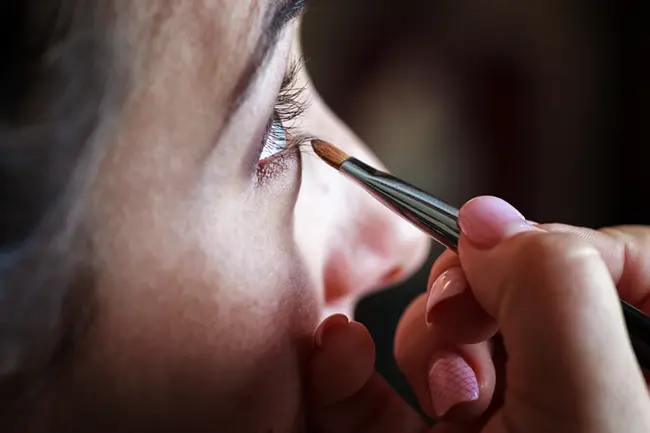
Whether you are at a high-street counter or a luxury beauty hall, these five checks will tell you more than the price tag ever will. You do not need to be a professional makeup artist to spot a genuinely good formula.
-
1
Swatch with a brush, not your finger
Your finger warms the product and makes almost any shadow look more pigmented than it will on the eye. One light swipe with a fluffy brush — that is how you will actually apply it.
-
2
Check payoff in one swipe
A single pass should give you visible, reasonably opaque colour. If you need three or four swipes to see the shade, that palette will require a lot of product and patience on the eye.
-
3
Watch for fallout
Swatch onto the back of your hand and gently tap off the excess. Heavy powdery fallout that scatters is a sign of a looser, less refined formula — and that means fallout on your cheeks every time you wear it.
-
4
Feel the texture in the pan
Run a clean finger lightly across the surface. It should feel smooth and slightly silky — not dry, gritty, or chalky. A scratchy texture in the pan almost always means patchy application on the eye.
-
5
Blend the edge of the swatch
The most revealing test of all. Take a clean brush and try to soften the edge of your swatch into the skin. A good shadow — budget or luxury — will diffuse smoothly. A poor formula will streak or refuse to soften, regardless of how much you work it.
Packaging and the Gift Factor
Part of the luxury price goes toward the heavy magnetic casing, the embossed branding, and the mirror — and for a gift, that actually matters. There is a real difference in unwrapping a beautifully packaged palette versus a budget one, and if presentation is part of the occasion, the premium is justified for that reason alone.
But if you are buying purely for the colour on the eye and the final look in the mirror, the outer casing changes nothing. An engraved palette is not, on its own, a sign of a better formula — and as we noted above, the ingredient story does not always favour the expensive option.
The Final Verdict
💸 Splurge if…
- You want complex foils, shimmers or multi-chrome finishes
- Effortless blending with minimal effort is the priority
- You are buying it as a gift and presentation matters
- You genuinely enjoy using beautifully designed products daily
💰 Save if…
- You are building an everyday matte neutral collection
- You use a dedicated eye primer — which you should be anyway
- Ingredient transparency matters to you or who you are buying for
- You want more colours for less money and you will actually use them
Either way, the five-step test above takes thirty seconds in-store and tells you far more than the price tag will.
Buying a palette as a gift — or for yourself?
Ask our Beauty Assistant to check the ingredients before you buy. Expensive does not always mean clean — and some of the best clean palettes are under £25.
Affordable vs Luxury Palettes — Frequently Asked Questions
It depends on what you need. Luxury palettes justify the price most clearly with complex shimmers, foils, and multi-chrome finishes — these are genuinely difficult to formulate well at a low price point. For everyday matte neutrals, a good budget palette paired with an eye primer can perform almost identically at a fraction of the cost.
Pigment density and finish quality, not colour intensity alone. A high-end bold shade applies evenly in one swipe with minimal fallout and blends cleanly at the edges. A shade that is simply loud but poorly formulated needs heavy layering, sheds noticeably, and looks chalky once you try to soften it. The blending test reveals this immediately.
For complex shimmers and foils, generally yes — the formulation is technically harder and the quality difference is visible. For everyday matte shades, high-street brands have closed most of the gap. The better choice depends on the specific look you want rather than price alone.
Swatch it in-store with a brush rather than your finger. Check pigment payoff in a single swipe, look for fallout on the back of your hand, feel the texture in the pan for chalkiness, and then try to blend the edge of your swatch with a clean brush. A quality formula — budget or luxury — will diffuse smoothly. A poor one will streak or resist blending regardless of how much you work it.
Not reliably. Some of the most popular luxury eyeshadow palettes contain the same flagged ingredients — microplastics like Polyethylene and Nylon-12, volatile silicones, synthetic dyes — as budget products. When we assessed palettes available in the UK, the cleanest options were mid-range and budget brands. Price is not a reliable guide to ingredient quality.
The casing and engraving add to the cost but do not change how the shadow performs on your eye. As a gift where presentation matters, the premium can be worth it. If you are buying purely for the result on your eye, the formula matters far more than the packaging.
Yes, and it makes a bigger difference than most people expect. A good eye primer helps budget shadows grip the lid, resist creasing, and last much closer to luxury wear time. It is one of the most cost-effective upgrades you can make to a budget eyeshadow routine — often more impactful than spending more on the palette itself.
The e.l.f. Perfect 10 Eyeshadow Palette and the 3INA Four Shadow Palette both passed our ingredient assessment and are available in the UK at under £25. For a clean mid-range option, the bareMinerals MINERALIST palette is worth checking. Our Beauty Assistant can give you a full ingredient breakdown on any palette you are considering.